Showing posts with label vitamin A. Show all posts

Grow-It-Yourself Alfalfa Sprouts More Fun Than They Sound

An ACHS student post on our Facebook has prompted us to update an earlier post about sprouts.

Alfalfa sprouts are a valuable source of vitamins A, C, E, and K, and the minerals calcium, potassium, phosphorus, and iron[1]. Sprouts have also been shown to include concentrated amounts of phytochemicals, which support optimal health and wellness.

Alfalfa sprouts are easy to grow and make flavorful additions to raw-food meals like salads, sandwiches, and main dishes like quinoa tabouleh. Other kinds of sprouts, like broccoli sprouts and Brussels sprouts, make crunchy, flavorful additions to cooked dishes (or roasted in a little garlic, olive oil, and sea salt as a side dish).

Read directions for how to grown your own alfalfa, in our earlier post here.

For more tips about how to eat sprouts and fun, family-friendly growing projects (like broccoli sprouts) download your free copy of the ACHS Wellness Guide here.

[1] For a clinical summary of the health benefits and potential contraindications of sprouts, read the Sloan Kettering website here.

Moroccan Argan Oil Antioxidant-Rich, Potential Skin and Dietary Support

Do you use argan (Argania spinosa) oil?

Also called Morocco ironwood, argan oil is from the soapwood family and has a history that can be traced back more than two million years.

Argan is a culinary oil and a cosmetic oil, and has traditionally been used in both skin and hair care. Medicinally, argan oil has been used to help heal wounds and with rheumatism and arteriosclerosis.

The oil, pressed from the trees’ kernels, contains more than 80% unsaturated fatty acids, vitamin A, and large quantities of vitamin E antioxidants and sterols; it may be very nourishing when used on the skin and may be effective as a dietary supplement.

Currently, there are about 50-60 women’s cooperatives in Morocco producing argan oil the traditional way. These cooperatives are growing in number as a resource for Berber women to revive the traditional hand-pressing method of extracting argan oil and to ensure an income. Read more about the women’s cooperatives on the Targanine website.

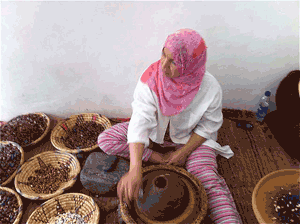
Traditionally, argan oil is hand-pressed by the Berber women. First the trees’ fruit pulp is allowed to dry; then it is removed. The remaining nuts are cracked between two stones so the kernels can be used undamaged. The kernels are lightly roasted and then ground by hand. An oily paste forms and the oil is removed through the use of lukewarm water and constant kneading. It is then decanted.

The picture in this blog post is from ACHS President Dorene Petersen, who recently hiked through the Atlas Mountains in Morocco and watched the women hand pressing the oil. Check back with ACHS Facebook for more info from Dorene about the medicinal properties and products of argan oil, and pictures from the women's cooperatives.

Here are some links to recent research articles about potential medicinal properties and uses of argan oil that you may find interesting:

1. Effect of dietary argan oil on fatty acid composition, proliferation, and phospholipase D activity of rat thymocytes

2. Consumption of argan oil (Morocco) with its unique profile of fatty acids, tocopherols, squalene, sterols and phenolic compounds should confer valuable cancer chemopreventive effects

3. Effect of Argan Oil on Platelet Aggregation and Bleeding Time: A Beneficial Nutritional Property

Share your experience using argan oil. Do you prefer it to olive oil? Is it more moisturizing than your traditional skin care base oil?
 
Support : Creating Website | SEO Template | Free Template
Copyright © 2011. Natural Medicine - All Rights Reserved
Proudly powered by Blogger